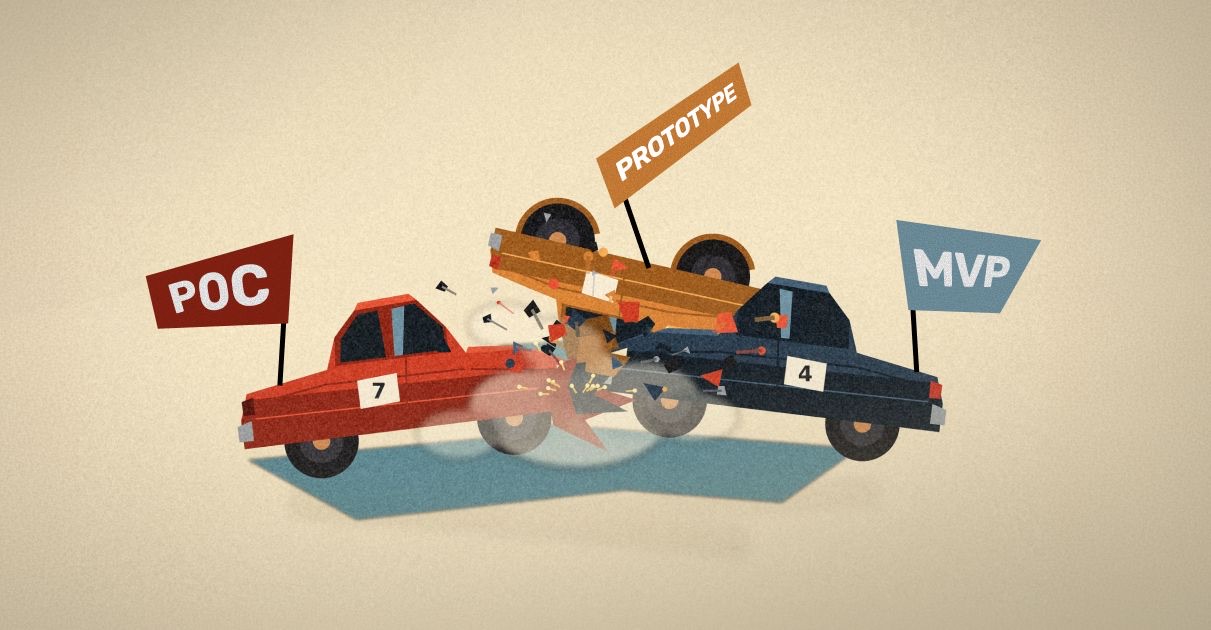
Every company is under pressure to “do something with AI”. Most already know where AI could create value, automate manual workflows, accelerate operations, reduce bottlenecks, or improve decision-making. The challenge isn’t ambition. It’s proving whether an AI use case can deliver measurable business impact before investing months of time, budget, and internal resources into a full-scale build. That’s exactly what the Agentic Sprint is designed for: validating real AI workflows in real operational environments. Quickly, pragmatically, and with measurable outcomes from day one.
Most AI initiatives don’t fail because the technology doesn’t work. They fail when operational reality hits:
- Wrong use case
- Unclear ROI
- Undefined production path
- Scoping takes too long
- Poor data quality
- No operational ownership
According to Gartner, 40% of agentic AI projects will be cancelled by the end of 2027 due to unclear value, cost overruns, and inadequate risk controls.
That’s why we created the Agentic Sprint. A fast, focused way to validate whether AI can solve a real business problem, before committing to a full build.

From AI Idea to Working Prototype in 10 Days
The Agentic Sprint turns AI ambition into a working prototype in just 10 working days.
Fixed scope. Fixed fee. No lock-in. No endless workshops, no vague experimentation, nor drawn-out discovery phases. Just one focused use case, tested against real business conditions.
By day 10, you leave with:
- A working agent prototype on your data
- Metrics measured from day one
- A defined path to production
- A clear go / no-go decision
As we like to say: You leave with a decision, not a maybe.

How the Sprint Works

Every Agentic Sprint follows a simple three-phase structure focused on one goal. Proving whether an AI workflow can create measurable business impact in a real operational environment.
In just 10 working days, companies move from use case validation to a working prototype tested on real workflows, data, and business constraints.
1. Frame
DAYS 1–2
We identify the right use case, define measurable metrics, validate data availability, and confirm technical feasibility.
We don’t build until the case and the data are real.
2. Build
DAYS 3–8
We design and deploy a working AI agent prototype using your workflows, data, and environment. Not a scripted demo, not a proof-of-concept built on clean sample data.
A working prototype you can actually pressure-test.
Depending on the use case, the sprint can include:
- Workflow automation
- Document analysis
- Knowledge agents
- Decision-support tooling
- Multi-agent collaboration
- Human-in-the-loop approval mechanisms
The goal is simple: prove whether the workflow creates real operational value before scaling it further.
3. Prove
DAYS 9–10
We measure the prototype against the KPIs defined at the start of the sprint.
You receive:
- Measurable results
- A production roadmap
- A clear recommendation for next steps
Whether the answer is “scale it” or “stop here”, you gain clarity fast without months of uncertainty.
What This Looks Like in Practice
Here’s what the Agentic Sprint looked like in practice with our two enterprise clients, as shown in the following two case studies. From identifying operational bottlenecks to building working AI workflows and measuring real business impact in just 10 working days.
1) Building a Knowledge & BA Agent at Enterprise Scale

The enterprise company completed the Agentic Sprint that involved a product and engineering team struggling with slow product discovery workflows.
And the bottleneck wasn’t engineering.
Senior product managers were losing time chasing context across Jira, Confluence, and Teams threads with the business department before features could even enter development.
Each feature request took an average of 11 days to move from raw request to approved specification.
KPI: Reduce discovery cycle from 11 days to 6 days.
Q built a Knowledge & BA Agent integrated directly into the client’s existing tooling with agent drafting full specification + human gate.
The result tested against 20 real features:
- Raw feature requests automatically converted into structured specs
- Acceptance criteria and edge cases generated automatically
- Human review built into every approval step
- Discovery cycles reduced from 11 days to just 4

Across more than 250 backlog items, the client identified the potential to recover approximately 1,750 senior PM days annually. Not through replacing teams. Through removing operational friction.

2) Multi-Agent Due Diligence for a US Private Equity Client

A US private equity client engaged in the Agentic Sprint with Q to solve the process of aggressive M&A timelines. Their legal and financial due diligence process was largely done manually using an expensive 3rd party tool that was difficult to scale, and they often operated under demanding deadlines.
Analysts were spending days reviewing large volumes of documentation under tight investment windows, creating bottlenecks and increasing the risk of missing critical findings.
Agentic Sprint was focused on fully automating one manual process end-to-end using agents and n8n for workflow automation capable of:
- Document ingestion
- Analysis of specific legal documentation
- Finding discrepancies between documentation
- Automated risk flagging
- Human-in-the-loop validation
The result:
- Duration of analysis reduced by 64%
- Faster analyst throughput
- Lower operational risk
This proved that the investment in the proprietary multi-agent AI system could replace the current expensive 3rd party tool with better results. The system didn’t replace analysts. It amplified them. Instead of spending time buried in repetitive document review, teams could focus on strategic judgment and faster deal execution.

Why Companies Choose Agentic Sprint
The most valuable AI systems today aren’t standalone chatbots. They’re embedded into workflows, connected to operational systems, and designed to solve specific business bottlenecks.
Companies use Agentic Sprint to:
- Validate AI use cases fast
- Reduce investment risk
- Identify real operational ROI
- Automate manual workflows
- Accelerate internal buy-in
- Move from experimentation to execution
The goal isn’t AI for the sake of AI. It’s measurable business impact.
Why Q
A two-week sprint is easy to copy. What stands behind it is not.
At Q, AI agents are already embedded into our own delivery workflows across engineering, QA, analysis, and operations.
Every engagement is backed by:
- Production-grade engineering teams
- Private AI infrastructure
- Human-in-the-loop governance
- A clear path from prototype to deployment
Your data stays yours. No client data ever touches public AI tools.

The Fastest Way to Understand AI Value Is to Test It
Eventually, every organisation reaches the same point: they need to see AI work inside their own business. That’s exactly what the Agentic Sprint is designed for.
One use case in, a working agent out. And a clear path to production.
Have an AI Use Case You Want to Pressure-Test?
If your organisation has:
- Repetitive workflows
- Document-heavy operations
- Manual analysis bottlenecks
- Processes slowed down by fragmented systems
we’d love to explore it with you.
Bring us one workflow. We’ll show you what an AI agent could do with it.
Get in touch with the Q team to book an Agentic Sprint discovery session.
Give Kudos by sharing the post!
ABOUT AUTHOR

Hrvoje Gorajscan
Chief Executive Officer