How Business Analysis in Software Development Helps Shape User-Centric Solutions
January 22, 2025 — 10 min read

Business analysis is a rapidly growing market, and has been playing a key role in software development for a while now. In recent years, it’s become crucial in IT, but what is it exactly? It’s more than just changing stakeholder ideas into clear requirements. It makes sure software solutions match the client’s business goals, and both market and user needs.
This blog post will help you learn more about the crucial role of business analysis and business analysts in software development — highlighting the purpose, methods, advantages as well as top practices in this field that Q also conducts, leading to a successful and well-executed end product.
In software development, Business Analysis is fundamentally an in-depth look at the business setting and the project’s goals. Business analysts are here to gather information, explain product requirements and — write down every single one of them.
But, it’s more than just documenting things down — business analysis tries to connect what’s your potential client’s goal. For example, increased revenue, higher user interaction, operations optimization, or how exactly software can meet these goals.
Due to their broad scope and the fact they’re capable of seeing the ‘bigger picture’, business analysts (BAs) act as a sort of IT consultants for the ever-growing number of companies. By creating a clear strategy and aligning business goals with technical abilities, efficient business analysis sets the stage for successful software solutions.
The main goal in business analysis involves identifying and defining requirements, and making them more understandable for the entire team involved in a new project. Development teams need to know project goals well. This task includes working with stakeholders to turn business ideas into structured document — product backlog that presents the solid basis of the MVP solution.
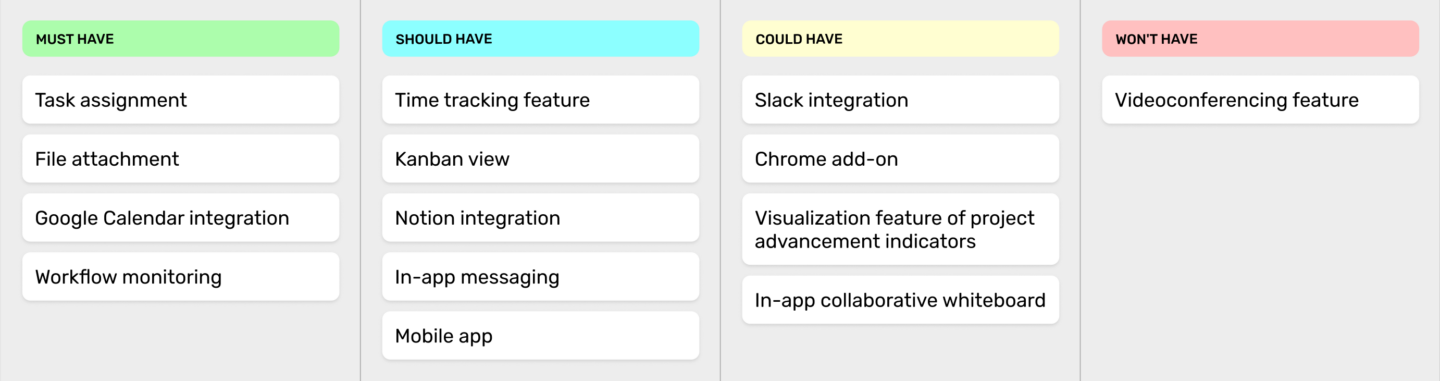
The BA identifies functions as must-haves, should-haves, could haves or those that will not be included at the current stage. Business analysis avoids misunderstandings — as these lead to rework or expensive project overruns.
Business analysis acts as a vital connection between stakeholders — who understand business goals — and development teams — who create the technical solution. For this, the crucial requirements that need to be met are:
Business analysis provides another key benefit — risk mitigation. BAs study different situations to find potential problems, such as user demands that cannot be met or system integration obstacles. The goal is to predict issues early, create strategies to handle them, and prepare backup plans. This way, the project can adapt faster to changes with objectives and ever-changing market trends in mind.
Business analysis describes a field, while the term business analyst denotes the person doing these tasks. Their daily duties might involve:

When there are no clearly provided requirements, development teams run the risk of wasting their effort on features that don’t have a direct impact on the business value. By providing a structured breakdown of the tasks that are to be prioritized first, business analysis not only clarifies, but also decreases the chance of reassessing the work, and it helps make the workflows more efficient. The same effectiveness is seen in budget allocation. The right prioritization of tasks is a guarantee for the right resource channeling to the areas that provide the highest return.
Projects initiated without proper requirement analysis may encounter high-cost threats caused by blind spots. An example of this is the underestimation of integration complexity which then results in prolonged timelines and additional resources required to continue working on the project. But this is where business analysis steps in, and delivers ideas to investigate the market settings and project challenges. Essentially, it is the factor that helps reduce unforeseen expenditures.
Business analysis can sometimes open opportunities for new integrations or improvements that otherwise can go unnoticed. Business analysts can also suggest features that would make the software more competitive by examining the current processes, analyzing workflows, and using industry benchmarks for best practices. Be it the exploration of a technology that’s not being used to its full potential, or the identification of a user segment that remains unexplored, business analysis is constantly pushing innovation.
The primary indicator for a software product’s success is its full compliance with both business and user requirements. Business analysis makes sure these priorities remain fundamental.
Be it the optimization of an e-commerce platform to raise its conversion rates or improving internal enterprise systems to streamline operations. BAs are first and foremost interested in getting the best possible results from a project, so they continuously validate requirements, but always with the main, all-encompassing strategy in mind.
Business analysts often leverage standardized techniques and tools to ensure that they capture relevant information accurately and communicate it effectively:
Each technique brings a specific purpose. Each of them can be chosen based on project size, complexity, and organizational culture.
The act of engaging stakeholders into the process can result in getting the precise picture of their specific needs. At the start of the project, you can conduct workshops, interviews, and brainstorming sessions. Communicate openly to adjust quickly if business goals change.
Agile or Scrum methods split development into short, iterative cycles; numerous modern software projects use these two techniques. Business analysts can also help with refining user stories, backlog grooming, plus they make sure each sprint has focus on features that bring measurable business value. An adaptive mindset lets teams handle changes without making the whole project go off track.
Regular checks if documented needs match the potentially changing business environment are crucial. Why? Because market shifts, regulatory updates or keeping up with competitors often need modifications in your project requirements. Updating a backlog of requirements — along with constant stakeholder feedback, leads to a more resilient project plan.
Whether you create a detailed product backlog, clear and consistent writing is key. Set up a version control system for all your documents so every team member is familiar with current requirements. An organized repository helps new stakeholders or developers onboard much more easily.
Of course, business analysis involves more than just bridging communication gaps, but nurturing efficient teamwork is and remains a pivotal task. To do this, you can promote regular stand-ups, joint planning sessions or shared dashboards. Close collaboration with UI/UX designers, developers, and project managers keeps all decisions in line with the main project goals.
Here’s how you can determine whether business analysis has been ‘efficient’ with these key metrics:
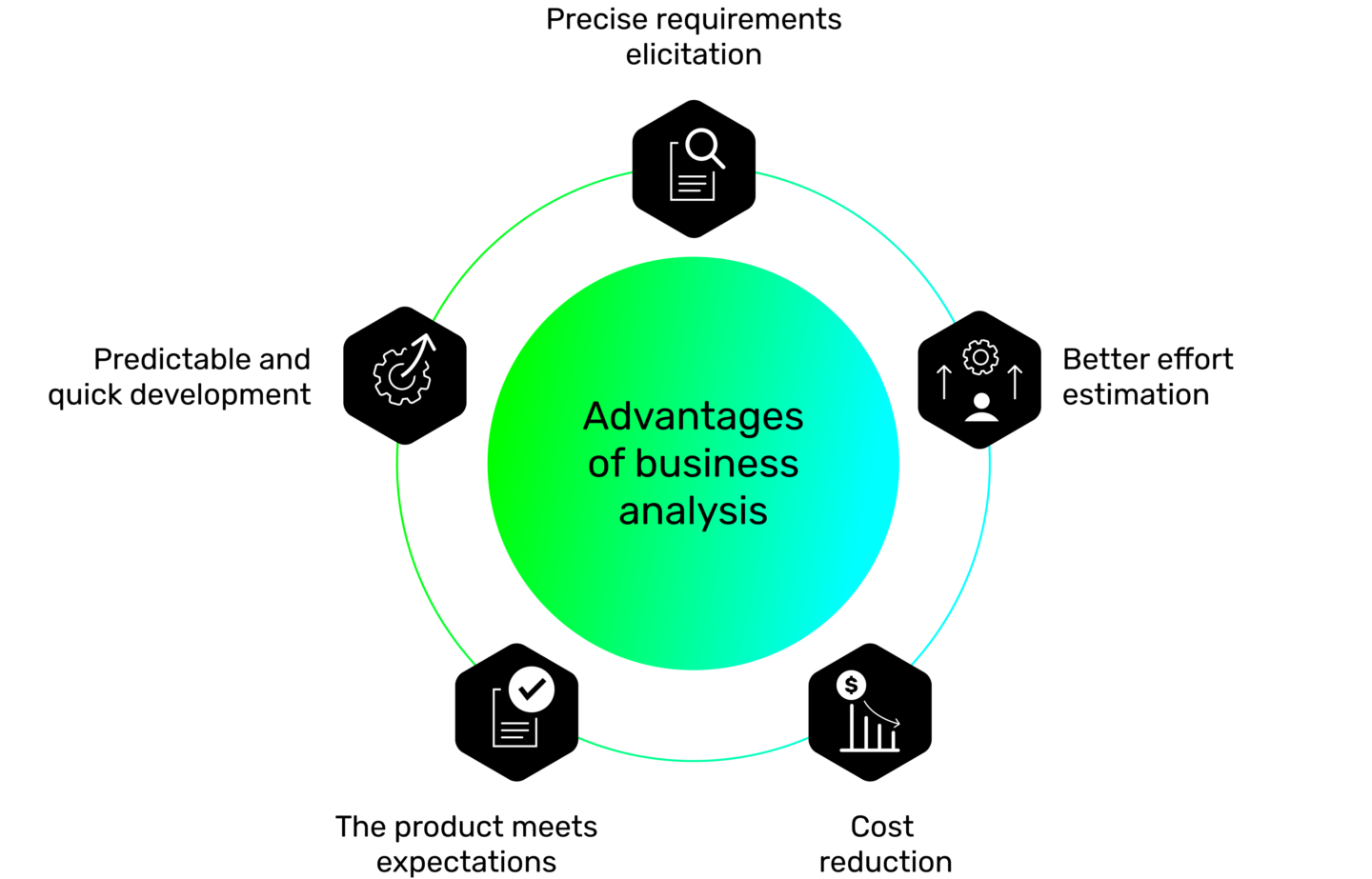
Business analysis plays a key role in the software development lifecycle. Why? Because it helps achieve these outcomes with much higher predictability.
Stepathlon is our partner and a digital fitness platform that offers fitness challenges, open to everyone regardless of age, gender, location or physical ability. By taking steps and engaging in other wellness activities, participants move around a customised virtual course, earning points and engaging with the community.

Discover how we teamed up with Stepathlon to create an impactful solution —read the full case study on our website.
Business analysis in software development goes beyond support functions — it holds the key to aligning business goals, technical requirements, user demands, and strategic innovation. Investing in comprehensive BA practices helps companies mitigate risks, improve product quality, and make sure each feature has a clear business purpose.
Business analysts drive success through interviews, documentation, facilitation — along with validation — benefiting the entire team with better clarity and productivity. As software projects become more complex, and competitors’ products also become more complex, the demand for skilled BAs grows stronger than ever. Engaging stakeholders early, iterating solutions, and validating requirements is key for teams to create software solutions that meet technical specifications and deliver true business value and impact for your client.
Let’s team up to turn your ideas into impactful products with the power of our expert business analysts.

qadmin
Partner with us